KPI-JCI 3055 jaw crusher has helped improve profitability of Derry Stone & Lime

by Steven E. Smith

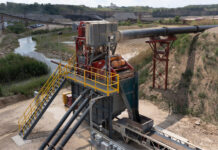
Derry Stone & Lime Co.’s new KPI-JCI 3055 Jaw Crusher, which was put into operation on Aug. 18

Like my great grandfather used to say, it wouldn’t break if you didn’t use it. Horse drawn equipment on his early 20th century farm and heavy machinery in today’s quarries are similar in that regard. At Derry Stone & Lime in western Pennsylvania, the rigors of being in the business of processing limestone and coal for more than 15 years has undoubtedly caused wear that, over time, resulted in considerable maintenance costs.

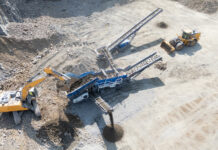
Some of the material handled by Derry Stone & Lime Co.’s jaw crusher.

After changing ownership twice since being in existence, Derry Stone & Lime Co. is now owned and operated by David Herrholtz. Herrholtz stated that “in the past four years we have made numerous updates and changes to better serve the needs of our customers for limestone and coal. We added a new Nordburg 6 X 16 Double Deck Screen, as well as CAT and John Deere track hoes, rubber tire loaders and Terex haul trucks to better serve our market needs.”

His most recent update started when Dave Herrholtz and his team recognized a need to investigate updating their jaw crushing unit. But their interaction with the professional team at Murrysville Machinery resulted in much more than just a basic machinery purchase.
The first step in the process was to review current issues and concerns, determined the expectations and goals of the Derry Stone & Lime staff and develop a plan to address the barriers that were keeping the company from meeting it goals. During that initial investigation of issues and concerns it was determined that the inefficiencies and mismatching of equipment in the system — in conjunction with the need for replacement of the existing crusher — were the main issues.


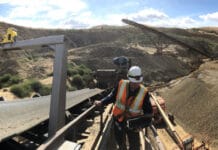
Front view looking across the top of the 3055 jaw crusher into the hopper feeder/truck dump box.

Another finding of that opening analysis was that there were inefficiencies such as a need to shut down the secondary crusher two hours earlier than the primary crusher in order to generate a surge pile of material for the start of the next day. Further, it was determined that the bed depth of the top deck of the scalping screen was too deep and the cone crusher was being fed oversized inbound material that resulted in bowl float and excessive wear. Lastly, these inefficiencies were resulting in the increased labor costs due to overtime hours to meet increasing production demands.

Next the sales professionals from Murrysville Machinery reviewed the operation of Derry Stone & Lime to develop a list and refine their desired goals and objectives to aid in the determination of the ideal solution of the aforementioned issues and concerns. Through this discussion, there was agreement that the plant inbound and finished product streams should be balanced. It was the observation of the Murrysville Machinery professionals that the bed depth of the scalping screen’s top deck would need to be reduced. In addition, the teams concluded that the system needed to provide smaller sized feed material into the cone and eliminate the bowl float in the system. Finally, it was the overarching perspective of both parties that the Derry Stone & Lime systems must generate an increase in the tonnage output while reducing operating time as well as labor overtime charges.


Top view of the 3055 showing stone feeding out of the hopper into the jaw crusher.

Following the system review and goal setting phase, Murrysville Machinery assembled a team of experts from Derry Stone & Lime Co., Murrysville Machinery as well as engineers from KPI-JCI to determine the best procedures to implement at Derry Stone & Lime Co. The team included Derry Stone & Lime Co. owner David Herrholtz and members of his staff, plant superintendent Don Cunningham, lead mechanic Herb Henning, crusher operator Adam Resslar and maintenance manager Russ Hersh. Members of the Murrysville Machinery team included company president Roy Leukhardt and sales engineer Ryan Hauser. Further, the team included industry support from Larry Broekemeirer, KPI-JCI technical support, and Ron Greiss, KPI-JCI engineer. This phase was truly a joint effort, which boasted a balance of industry experience and engineering expertise coupled with site specific knowledge and product technical expertise.

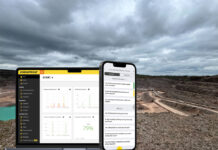
One of the tools used by the team to accurately assess the Derry Stone & Lime Co. systems was the AggFlow software. Larry Broekemeirer from KPI-JCI and Ryan Hauser from Murrysville Machinery used the software to define the current productivity of the systems. Using the AggFlow, the team was able to detect current inefficiencies in the system. It was determined that the cone crusher was operating at 102 percent of capacity; an over-capacity caused by the primary jaw crusher.

Digging deeper, the team recognized the need for increase tonnage had resulted in the closed side setting of the jaw crusher to be opened up to deliver a greater number of tons of material. In turn, the resulting material from the primary crusher was larger top sized resulting in a heavier bed depth on the top deck of the scalping screen. Further, the larger sized material was being sent through the system to the cone crusher as well. To compound the already greater than expected capacity of the cone crusher, the system was additionally delivering rock that was greater than the appropriate particle size to be reduced. Despite the increased load on the cone crusher, it was processing the inbound material, but the bowl of the cone floated and excessive damage and wear was being exerted on the machine based on team findings.

After reviewing this information, the team recognized that the key improvement in the system was to properly size the jaw crusher so that the workload within the system was more evenly balanced between the primary jaw crusher and the cone crusher. Since it had been surmised to forego expensive repairs to curtail the rising maintenance costs to the existing crusher, Derry Stone & Lime Co. was looking to replace it with a new jaw crusher. Instead just offering a unit that was in the sales inventory at Murrysville Machinery, the team reviewed the recommendations of Ron Greiss, engineer from KPI-JCI. Greiss suggested that the existing primary jaw crusher be replaced with a KPI-JCI (Kolberg-Pioneer) 3055 Portable Jaw Crusher, based on the information generated by the AggFlow software and a review of the goals and objectives.

Through the expertise of the team and sound information of the AggFlow software the projected performance of the changes to systems were considerable. The KPI-JCI 3055 jaw crusher was expected to operate at 90 percent of capacity and since the closed side setting could be adjusted down to create a smaller outbound material size, the depth of the scalper screen’s top deck and size of material that would enter into the cone crusher. The adjustments to the system enabled the cone crusher to then operate at 82 percent of capacity.

Lastly, the overall production of the entire plant was increased by 50 tons per hour. According to Herrholtz, the new jaw crusher is providing additional efficiencies so that the Derry Stone & Lime Co. can stockpile an inventory of aggregate and be seasonal in the operation of the crushing plant. “There is a cost saving here that is important as well.”

One of the signs of a successful business is its ability to take risk and make improvements in its systems so that they can generate more — and better — product in the same amount of time. The openness to change and vision of David Herrholtz is helping to make those successes possible at Derry Stone & Lime Co. The sign of outstanding sales professionalism and exemplary product support is evidenced in helping the customer determine the machinery purchase that best fits their needs. At Derry Stone & Lime, the Murrysville Machinery and KPI-JCI approach to technical advice and customer service helped to make these improvements at Derry Stone & Lime Co. a reality. 


^^TOP^^